

Plant Health Care
Tree Health Assessments • Fertilization • Soil Care • Insect & Disease Treatment • Louisville, KY
Request a Free Plant Health Care Estimate
ISA Certified Arborists serving Louisville since 1960.


Ready to have your trees checked? Request a plant health care visit or get a free estimate.
Mature trees are some of the most valuable things on your property. They shade your home, raise property value and take decades to replace. Bob Ray Co., Inc.’s Plant Health Care (PHC) program keeps Louisville trees healthy by finding problems early and treating the cause, not just the symptoms. Every program starts with an assessment by an ISA Certified Arborist and is built around your trees, your soil and the pests that are active in Kentuckiana.
Our Plant Health Care Services
It Starts With an Arborist Assessment
Our arborists inspect the canopy, trunk and visible root zone, identify the species, and look for signs of insects, disease, decline, storm damage and stress. You get a clear explanation and a recommended treatment plan with timing.
Soil Testing and Soil Health
We take soil samples per tree and use the results to guide treatment instead of guessing. Services include soil amendment, subsurface fertilization and water bags.
Emerald Ash Borer and Other Trunk Injections
Healthy ash trees can be protected with EAB trunk injections, which put the treatment directly into the tree’s vascular system with no drift and no spray.
Insect and Disease Sprays
Targeted sprays protect leaves and new growth. Our licensed applicators use the right product at the right stage of the pest’s life cycle.
Growth Regulators and Fruit Inhibitors
A tree growth regulator slows shoot growth and directs more of the tree’s energy into roots and defense. A fruit inhibitor reduces messy fruit, nuts and seed pods.
Root Rot, Decay and Declining Trees
Conks at the base of a tree, thinning canopies and dieback can mean serious decay. Our arborists will tell you honestly whether treatment makes sense.
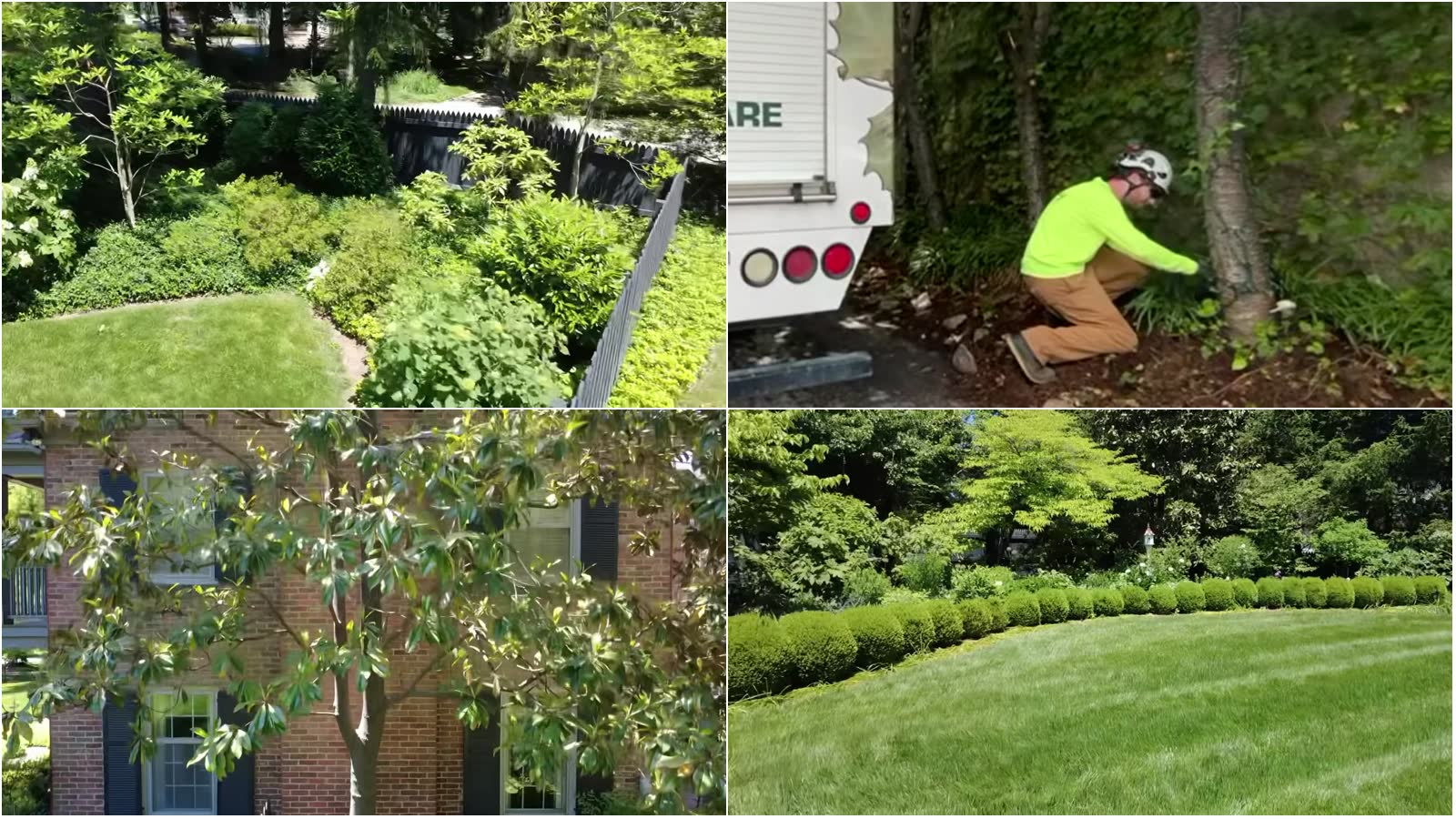
See our PHC team at work
Why Choose Bob Ray Co. for Plant Health Care?
- ISA Certified Arborists diagnose every property
- Serving Louisville and Kentuckiana since 1960
- Licensed, trained applicators and TCIA accredited
- Treatments recommended only when your trees need them
- One team for tree health, pruning, removal and land clearing
It Starts With an Arborist Assessment
Our arborists inspect the canopy, trunk and visible root zone, identify the species, and look for signs of insects, disease, decline, storm damage and stress from construction, drought or compacted soil. You get a clear explanation of what is going on and a recommended treatment plan with timing, so you only pay for treatments your trees actually need.
Soil Testing and Soil Health
Most tree problems in Louisville start below ground. Heavy clay, compaction from mowers and foot traffic, and high pH in urban soils limit how well roots take up water and nutrients. We take soil samples per tree and use the results to guide treatment instead of guessing.
- Soil sampling: lab analysis of nutrients, pH and organic matter.
- Soil amendment: correcting deficiencies and improving soil structure based on the test.
- Subsurface (deep-root) fertilization: nutrients injected into the root zone where feeder roots can use them, without feeding the lawn on top.
- Water bags: slow-release watering for stressed trees during dry stretches.
Emerald Ash Borer and Other Trunk Injections
Emerald ash borer (EAB) has killed millions of ash trees across Kentucky, and untreated ash in Louisville are at very high risk. Healthy ash trees can be protected with EAB trunk injections, which put the treatment directly into the tree’s vascular system with no drift and no spray. Injection is also how we treat:
- Insecticide trunk injection for boring and sap-feeding insects
- DED trunk injection to help protect valuable elms from Dutch elm disease
- Stemix injection for micronutrient deficiencies that show up as yellow or chlorotic leaves
- Other trunk injections recommended by your arborist
Some products are better delivered through the bark or the soil. For those we use a trunk wash or soil drench, which the tree takes up over several weeks.
Insect and Disease Sprays
When timing matters, targeted sprays protect leaves and new growth. Our licensed applicators use the right product at the right stage of the pest’s life cycle.
- Insecticide spray for bagworms, Japanese beetles, aphids, scale crawlers and other leaf-feeding insects (see our post on common tree pests)
- Fungicide spray for leaf diseases such as anthracnose, apple scab and needle cast
- Bactericide spray for bacterial problems like fire blight on susceptible ornamentals
- Foliar spray nutrition for a quick boost to stressed trees
- Horticultural oil and dormant oil to smother overwintering scale, mites and insect eggs with low impact on beneficial insects
- Herbicide and basal bark spray to control invasive brush like bush honeysuckle and unwanted woody growth
Growth Regulators and Fruit Inhibitors
A tree growth regulator slows shoot growth and directs more of the tree’s energy into roots, fine roots and defense. It is useful for stressed trees, trees under power lines and trees recovering from construction. A fruit inhibitor reduces messy fruit, nuts and seed pods from trees like sweetgum, ginkgo, crabapple and ornamental pear, so sidewalks, patios and driveways stay cleaner.
Root Rot, Decay and Declining Trees
Conks at the base of a tree, thinning canopies and dieback can mean serious decay. Some conditions, like Ganoderma root rot, affect whether a tree is safe to keep. Our arborists will tell you honestly whether treatment makes sense or whether the tree has become a risk. When a tree can’t be saved, our tree removal crews can take it down safely.
Plant Health Care Works Best With Proper Pruning
Treatments and good pruning go together. Removing dead, diseased and crossing branches to ANSI A300 standards improves airflow, reduces disease pressure and lowers storm risk. Learn more about our tree care services, including pruning, selective thinning, cabling and bracing.
A Year-Round PHC Calendar
- Late winter: dormant oil, assessments and soil sampling while leaves are off
- Spring: EAB and insecticide injections, fungicide sprays at bud break, fruit inhibitors at bloom
- Summer: insect sprays, horticultural oil for scale crawlers, water bags during drought
- Fall: subsurface fertilization, soil amendment and growth regulator applications
Plant Health Care FAQs
Is it too late to save my ash tree? If the tree still has most of its canopy, EAB injections can often protect it. Trees with heavy dieback usually can’t be saved and become brittle and hazardous. An arborist assessment will tell you which group your tree is in.
How often do trees need fertilizing? It depends on your soil test. Many landscape trees benefit from subsurface fertilization every year or two, especially in compacted urban soil.
Are your treatments safe for kids and pets? We follow label directions and choose low-impact methods like trunk injection and soil application where we can. Your technician will tell you about any re-entry time.
Where do you provide plant health care? Louisville and Jefferson County, including St. Matthews, Jeffersontown, Middletown, Prospect, Lyndon, Anchorage and Fern Creek, plus nearby Oldham, Shelby and Bullitt counties and Southern Indiana. More tips are on the Bob Ray tree care blog.
Schedule a Tree Health Assessment
Spotting a problem early is the cheapest way to keep a tree. Let a Bob Ray Co. ISA Certified Arborist take a look and build a plan that fits your trees and your budget.