NEED A CERTIFIED ARBORIST ON SITE FOR A FREE PROPOSAL? CLICK HERE.
Understanding the Impacts, Symptoms, and Expert Care from Bob Ray Co. Louisville’s landscapes thrive with mature oaks, maples, and other shade trees that enhance property values, provide shade, and support local ecosystems. Yet one of the most destructive and often overlooked threats to these trees is Ganoderma fungus, also known as Ganoderma root rot or butt rot. This wood-decay pathogen weakens trees from the inside, creating serious safety risks for homes, sidewalks, and people across the Louisville area.
NEED A CERTIFIED ARBORIST ON SITE FOR A FREE PROPOSAL? CLICK HERE. As Louisville’s trusted family-owned tree care experts since 1960, Bob Ray Co., Inc. regularly assesses and manages trees affected by this disease. Our ISA-certified arborists help property owners identify problems early and protect their landscapes. Here’s what every Louisville homeowner and property manager needs to know about Ganoderma fungus and its impacts on trees. What Is Ganoderma Fungus? Ganoderma is a genus of wood-decay fungi that causes root and butt rot in living trees. It attacks the heartwood and lower trunk or roots, breaking down lignin and cellulose and leading to progressive internal decay.
Two main types appear on trees:
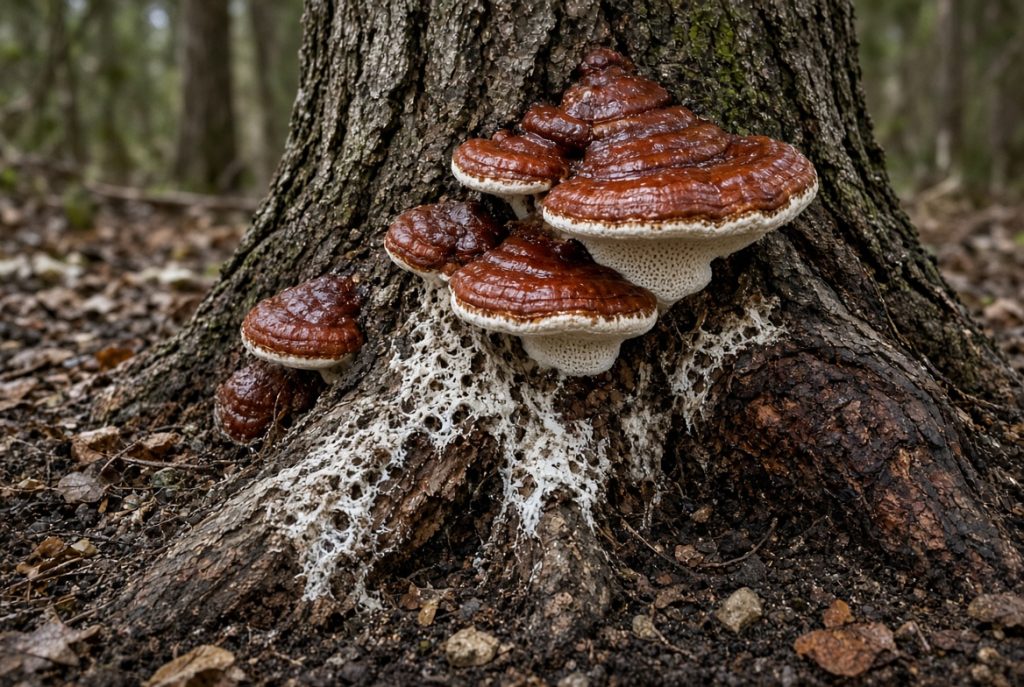
- Varnished (laccate) fungus rot — shiny, mahogany-to-reddish-brown upper surface with a white margin.
- Unvarnished fungus rot — similar colors but duller, non-shiny surface.
Common species in the region include Ganoderma applanatum (artist’s conk) and Ganoderma sessile (formerly often called G. lucidum). These fungi produce distinctive shelf-like fruiting bodies called conks near the base of the tree or on exposed roots.
Symptoms of Ganoderma Root Rot in Louisville Trees
Early detection is critical because internal decay can be advanced before external signs appear. Watch for these key indicators:
- Shelf-like conks (single or clustered) on the lower trunk, root flare, or exposed roots — often the first clear sign.
- Yellowing, wilting, or undersized leaves.
- Thinning canopy, dieback of branches, or premature leaf drop.
- Reduced overall vigor and growth.
- Cracking, bleeding, or soft/spongy wood at the base.
- In advanced cases, sudden failure of the tree during storms even if the canopy still looks relatively healthy.
Oaks and maples — among the most common trees in Louisville parks and yards — are particularly susceptible, along with honey locust, ash, elm, and sometimes conifers.
Impacts on Trees in the Louisville Area
Once established, Ganoderma continues to decay the structural wood. Healthy, vigorous trees may survive longer, but stressed trees (from drought, construction damage, poor soil, or mechanical injury) decline faster. The disease can kill a tree in as little as three to five years.
The greatest risk is structural failure. Decayed roots and lower trunks lose strength, making trees prone to uprooting or breaking in Kentucky’s frequent thunderstorms and high winds. This creates hazards near homes, power lines, sidewalks, and playgrounds throughout Louisville and surrounding Kentuckiana communities. There is no effective chemical cure once infection is established. Fungicides do not reach the decayed tissue effectively, and the fungus can persist in dead wood.
Prevention and Management Strategies
The best defense is prevention and proactive care:
- Avoid wounding roots and lower trunks during mowing, construction, or landscaping.
- Maintain tree vigor with proper watering, mulching, fertilization, and soil care.
- Choose appropriate tree species for the site and plant correctly.
- Monitor mature trees annually, especially oaks and maples.
- When conks appear, have a certified arborist perform a risk assessment. Severely compromised trees often need removal to eliminate hazards. Remove as much of the stump and infected roots as practical to limit further spore production.
How Bob Ray Co. Protects Louisville Trees
For more than 60 years, Bob Ray Co., Inc. has served Louisville with comprehensive tree care backed by four generations of expertise. Our ISA-certified arborists provide:
- Professional tree health assessments and disease diagnosis
- Plant health care programs (fertilization, soil improvement, and related treatments)
- Safe pruning, cabling, and bracing to support weakened trees when appropriate
- Expert tree removal and stump grinding when structural integrity is compromised
- Storm damage cleanup and full recycling of wood into mulch and other products
We focus on keeping Louisville’s trees healthy and properties safe using science-based practices. Whether you notice suspicious conks at the base of an oak or simply want a proactive inspection of your mature trees, our team is ready to help.
Protect your Louisville landscape today. Contact Bob Ray Co., Inc. for a free estimate. Call (502) 425-7654 or visit bobrayco.com No job is too small, and no tree is too tall — we’re Louisville’s trusted tree care professionals.
Healthy trees strengthen our community. Let Bob Ray Co. help keep your strong against threats like Ganoderma fungus.