Bob Ray Company’s ISA Certified Arborist understand that tree removal is often a last resort, but when it becomes necessary, it should be done with care, precision, and adherence to safety standards. Here’s a detailed look at the tree removal process guided by ANSI (American National Standards Institute) standards, specifically ANSI A300, which provides guidelines for all our tree care operations.
1. Assessment and Decision Making
Before any removal process begins, a thorough assessment is crucial:
- Tree Health Evaluation: We check for signs of disease, pest infestation, or structural instability. Decisions for removal are often based on whether the tree poses a safety risk or has poor health prospects.
- Site Analysis: We consider the tree’s location relative to structures, utilities, and other trees. This includes assessing potential hazards like power lines or buildings.
- Regulatory Compliance: We review local ordinances and permits required for tree removal, ensuring we comply with community standards and environmental laws.
2. Planning the Removal
- Safety First: Safety is paramount. We plan escape routes for ground workers, identify emergency meeting points, and ensure all team members understand the plan.
- Technical Planning: Using ANSI A300 standards, we plan the direction of fall if applicable, assess the use of cranes or rigging, and decide on the best method for the tree’s size and location.
- Equipment Check: All equipment, from chainsaws to protective gear, is inspected to meet OSHA and ANSI safety standards.
3. Execution of Removal
- Preparation: The area around the tree is cleared, and barriers are set up to keep non-workers safe. For larger trees, we might use ropes for climbing or cranes for support.
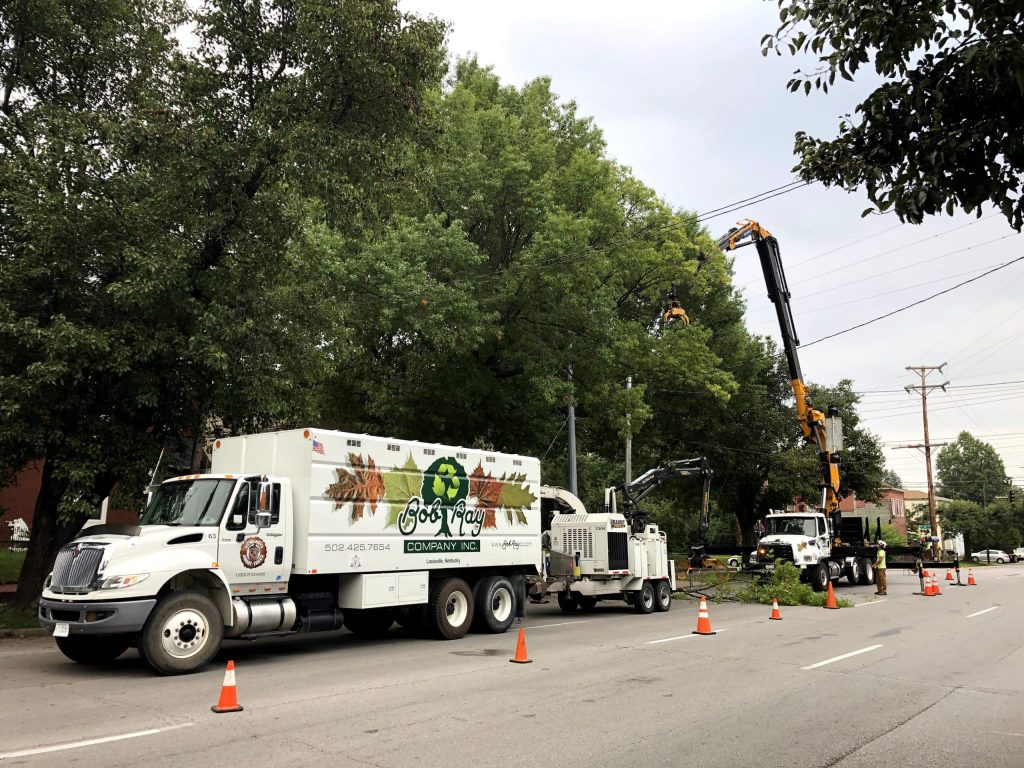
- Cutting: We follow these steps: Limbing: Removing branches to lighten the load on the tree trunk. Directional Cutting: For trees that can be felled, we use notch cuts and back cuts to control the tree’s fall direction, adhering to ANSI standards for cutting techniques (ANSI Z133). Sectional Dismantling: For trees in tight spaces or near utilities, we remove the tree in sections from the top down, lowering pieces with ropes or our advanced cranes (See them here: Tree Removal)
- Stump Removal: If requested, we grind down or remove the stump, taking care to minimize root damage to surrounding vegetation. Separated line item most of the time.
4. Clean-Up and Post-Removal Care
- Debris Management: All wood, branches, and chips are either removed from the site or managed per the client’s wishes, which might include chipping for mulch or leaving log sections for habitat.
- Site Restoration: We repair any damage to the landscape, ensuring the area is left in better condition than we found it, where possible.
- Plant Health: If removal was due to disease, we might recommend treatments for nearby plants to prevent spread or suggest new plantings.
5. Documentation and Follow-Up
- Documentation: We document the procedure, including any permits used, safety measures taken, and a record of the tree’s condition for future reference or insurance purposes.
- Client Education: We take the time to explain why the tree was removed, what signs to look for in the future, and how to maintain the health of remaining trees.
Conclusion Tree removal, when necessary, should be approached with respect for both the tree and the environment it exists within. Bob Ray Company’s ISA Certified Arborist ensure that each step of this process aligns with ANSI standards to guarantee safety, efficiency, and environmental stewardship. If you’re facing a situation here in Louisville Kentucky where tree removal might be needed, remember that professional, certified care can make all the difference in managing your landscape responsibly. Simply click below for a free estimate or if you would like to speak with an ISA Arborist today: Free Estimate – Bob Ray Co. Inc. – Tree Service & Care Since 1960