At Bob Ray Company, we’re passionate about keeping your trees healthy and vibrant. One common issue we see in Colorado blue spruce (Picea pungens) is Rhizosphaera needle cast, a fungal disease that can leave your beautiful evergreens looking sparse and unwell. In this blog, we’ll dive into what needle cast is, how to identify it, and the steps you can take to treat and prevent it, ensuring your blue spruce thrives for years to come. What is Rhizosphaera Needle Cast? Rhizosphaera needle cast is caused primarily by the fungus Rhizosphaera kalkhoffii, though other fungi like Stigmiana can sometimes contribute. This disease targets spruce trees, especially Colorado blue spruce, which are highly susceptible, particularly when grown outside their native range or under stress from drought, poor soil, or overcrowding. The fungus infects needles, causing them to discolor, drop prematurely, and leave trees with a thin, unsightly canopy. If left untreated, repeated infections can lead to branch dieback and, in severe cases, tree death.
Schedule Your Free On-Site Visit With a Certified Arborist on Staff


Identifying Needle Cast Symptoms Early detection is key to managing needle cast.
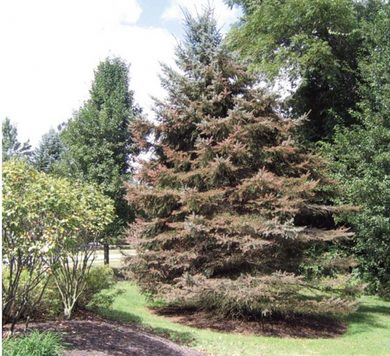
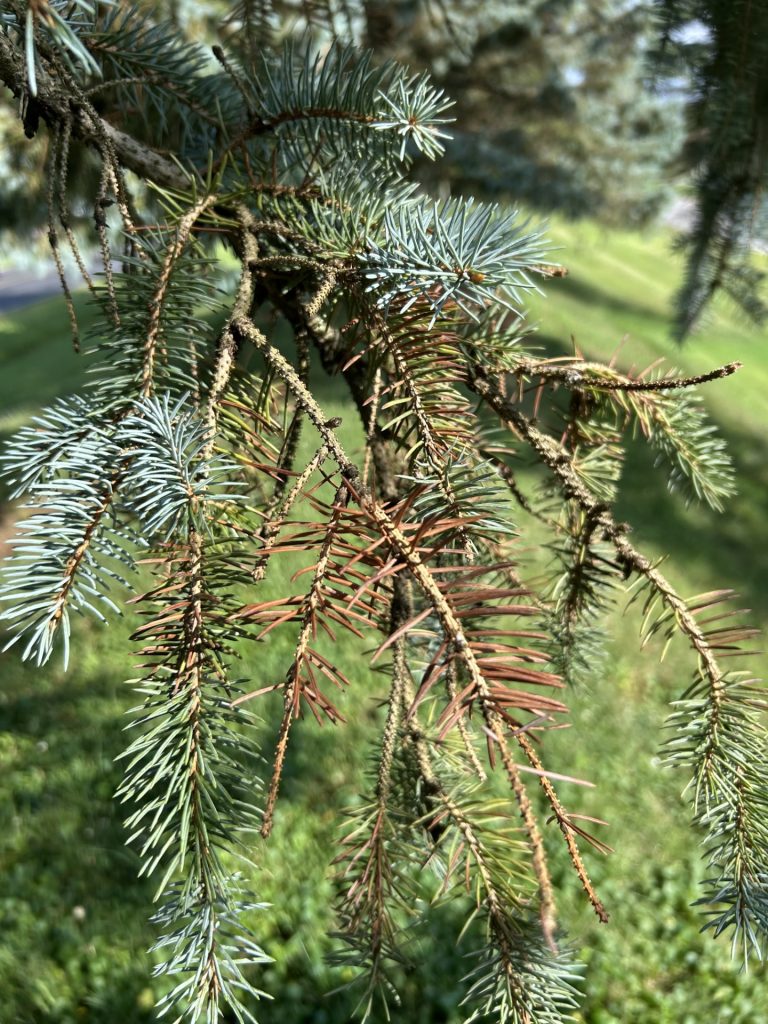
Here’s what to look for: Needle Discoloration: The first sign is often the innermost needles on lower branches turning yellow, then purplish-brown or brown. This typically starts on the lower canopy and progresses upward and outward. New growth at branch tips often remains green initially.
Needle Drop: Infected needles fall off, typically 12–15 months after infection, leaving branches bare and the canopy thin. This gives the tree a “see-through” appearance.
Black Fruiting Bodies: Using a 10X hand lens, you may spot tiny black dots (pycnidia) in neat rows along the stomata of infected needles. These are the fungal fruiting bodies that spread spores via rain or overhead watering.
Branch Dieback: After 3–4 years of severe needle loss, branches may die, and the tree’s overall health declines.
If you’re unsure about the diagnosis, we recommend reaching out to one of our Certified Arborist on staff.
How Bob Ray Company Treats Needle Cast At Bob Ray Company, we take a comprehensive approach to treating needle cast, combining professional expertise with environmentally responsible practices.
Here’s how we can help: Professional Diagnosis: Our certified arborists will inspect your blue spruce to confirm Rhizosphaera needle cast and rule out look-alike issues like Stigmina needle cast or Cytospora canker. We may recommend lab testing for precise identification.
Fungicide Applications: Fungicides are a cornerstone of needle cast management but must be timed correctly to protect new growth. We use products containing chlorothalonil or copper-based compounds (e.g., Bordeaux mixture), which are proven effective against Rhizosphaera. Timing: We apply the first spray when new needles are half-elongated (typically late April to early May) and a second spray 3–4 weeks later when needles are fully elongated. In wet seasons, additional applications may be needed every 3–4 weeks.
Coverage: Thorough coverage of all needles is essential, which can be challenging for large trees. Our professional equipment ensures effective application, even on taller spruces.
Duration: Treatment typically spans 2–3 years to break the disease cycle, as fungicides prevent new infections but don’t cure existing ones. Severely affected trees may need longer.
Cultural Practices: To reduce disease spread and tree stress, we: Prune Infected Branches: Remove and destroy (burn, bury, or hot compost) diseased branches and fallen needles to reduce spore sources. We prune during dry weather to avoid spreading the fungus.
Improve Air Circulation: Ensure proper spacing between trees and avoid shearing, which creates dense, wet foliage conducive to fungal growth.
Adjust Watering: Avoid overhead irrigation, which spreads spores. We recommend drip irrigation and maintaining a 3–4-inch layer of wood chip mulch (not mounded against the trunk) to reduce weed competition and retain soil moisture.
Enhance Tree Vigor: We provide supplemental fertilization and ensure proper watering to minimize stress, especially during drought.
Long-Term Management: For heavily infected trees or those too large for effective spraying, we may recommend removal and replacement with resistant species like Norway spruce (Picea abies) or Meyer spruce (Picea meyeri), which are less susceptible to needle cast. Diversifying your landscape with non-spruce evergreens can also reduce disease pressure.
www.BobRayCo.com FREE ESTIMATES
Preventing Needle Cast Prevention is the best defense against needle cast.
Here are tips to keep your blue spruce healthy: Choose Resistant Varieties: Opt for cultivars like ‘Hoopsii’ or ‘Fat Albert’ Colorado blue spruce, which may show some resistance, or plant Norway or white spruce instead.
Plant Thoughtfully: Select sunny sites with well-drained, acidic soil and space trees to allow air circulation. Avoid planting near infected trees.
Maintain Tree Health: Water during dry periods, avoid root damage, and apply mulch to reduce stress.
Monitor Regularly: Check your trees annually for early signs of needle cast, especially on lower branches, and act quickly if symptoms appear.
Why Choose Bob Ray Company? At Bob Ray Company, we understand the unique challenges of maintaining blue spruce in landscapes. Our team of certified arborists uses cutting-edge techniques and environmentally sound treatments to protect your trees. We’re local experts committed to personalized service, ensuring your spruce gets the care it needs to recover from needle cast and thrive. Whether it’s precise fungicide applications, pruning, or long-term tree health planning, we’ve got you covered.