At Bob Ray Company, we’re committed to keeping your trees healthy and thriving. As part of our Arboricultural Health Care services, we’re spotlighting a growing threat to beech trees: Beech Leaf Disease (BLD). Here’s what you need to know—and how we can help.
What is Beech Leaf Disease?
First identified in Ohio in 2012, BLD is caused by the nematode Litylenchus crenatae subsp. mccannii. It’s now spreading across the U.S., including the Northeast, Midwest, and even into Canada, affecting both American and European beech trees. This disease is a serious concern because it can kill young trees in just 2–5 years and weaken mature ones over time.
Signs to Watch For
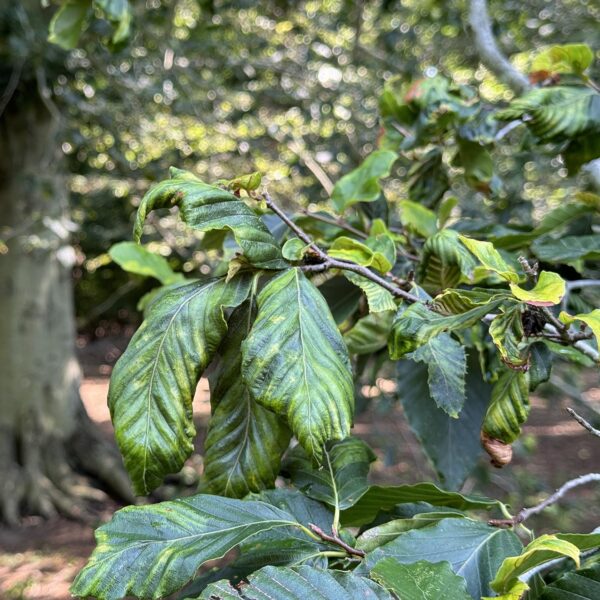

BLD primarily affects beech tree leaves and buds. Look for these symptoms:
- Dark striping between leaf veins, visible in spring.
- Crinkled, leathery leaves that drop early.
- Bud failure, leading to sparse canopies and dieback.
If you notice these signs, your tree may be at risk. Early detection is key to managing the disease.
Why It’s a Problem
BLD doesn’t just harm individual trees—it threatens entire ecosystems. Beech trees are vital for wildlife, providing food and habitat, and they play a role in carbon sequestration. In regions like the Northeast, where beech dominates forests, BLD could have long-term ecological impacts.
How Bob Ray Company Can Help
Our certified arborists at Bob Ray Company are equipped to tackle BLD with a proactive plant health care approach:
- Diagnosis: We start with a thorough visual inspection to confirm BLD and assess your tree’s health.
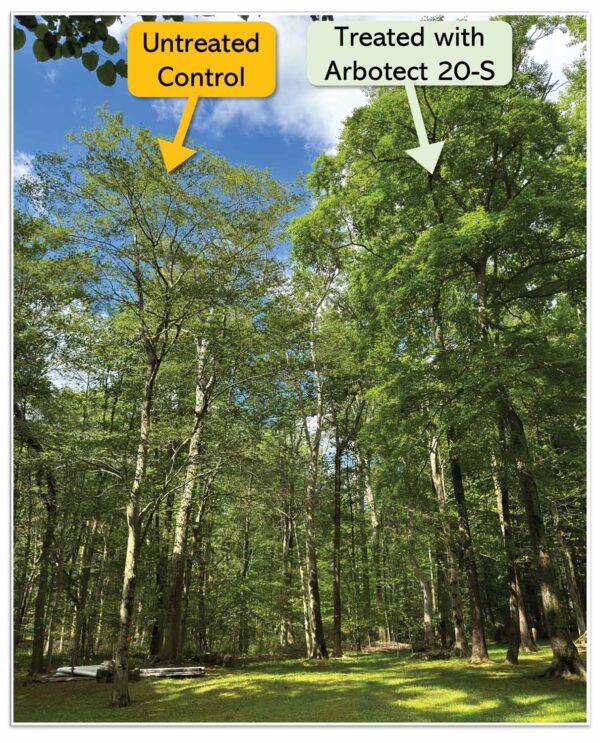
- Management: While there’s no cure yet, we use strategies such as; Foliar applications coupled with a fungicide/nematicide injection.
- Monitoring: Regular check-ins help us track the disease and adjust care as needed. We will follow up.
- Prevention: We can advise on resistant beech varieties or alternative species for future plantings if the problem has caused tree to decline fully.
Act Now to Protect Your Trees
Beech Leaf Disease is a growing threat, but with Bob Ray Company’s expertise, you can protect your landscape. Contact us today for a consultation—we’ll ensure your trees thrive for years to come! Contact our Plant Health Care Division Today!